
Urethane Cement Flooring San Antonio
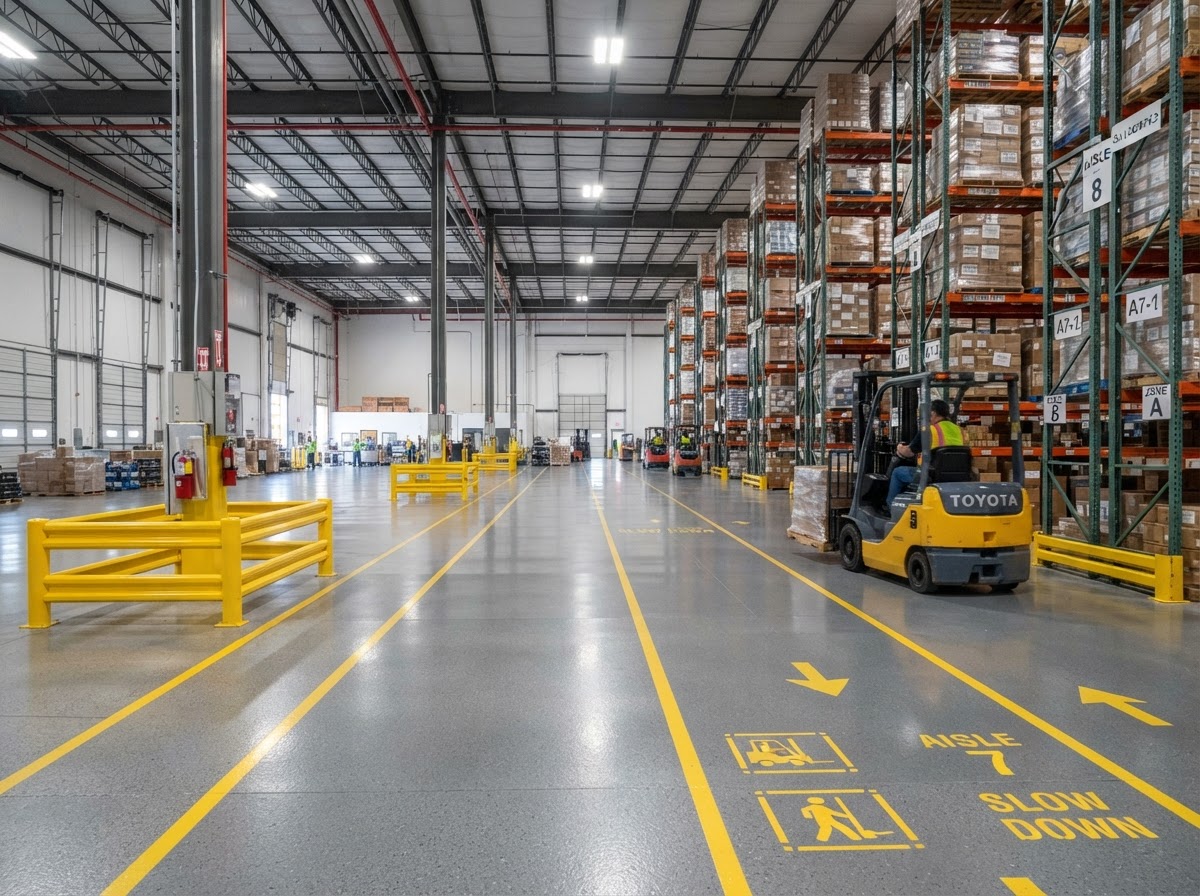
Where Urethane Cement May Be Used
Urethane cement is considered where floors experience combinations of thermal change, moisture, frequent cleaning, mechanical wear, impact, and chemical exposure. The system is matched to the actual service conditions rather than treated as a decorative upgrade.
Legitimate potential applications include commercial kitchens, food and beverage production environments, processing areas, industrial facilities, washdown environments, manufacturing areas, commercial service areas, production support spaces, and high-demand concrete floors where a more specialized system is warranted.
Dry Coats does not automatically claim that an installation satisfies USDA, FDA, HACCP, NSF, or other regulatory requirements. Regulatory compliance depends on the specific system, specification, facility, and installation requirements — not simply on selecting a resinous floor.
Concrete Preparation & Installation
Installation requirements vary by manufacturer and specification, but professional preparation is consistent across urethane cement projects. A coating is only as durable as the surface it bonds to.
- Concrete assessment — condition, hardness, and existing coatings.
- Existing coating removal — clearing failed or incompatible coatings.
- Mechanical preparation — grinding and profiling for adhesion.
- Joint and crack evaluation — assessing movement and defects.
- Repairs — addressing spalls, damage, and surface defects.
- Moisture considerations — conditions that affect system selection.
- Cove-base considerations — integral cove where applicable.
- Primer — where the system requires it.
- Urethane cement installation — placed and finished per specification.
- Texture / topcoat selection — traction and finish where applicable.
For the detailed preparation behind these systems, see the concrete grinding & surface preparation page.
Urethane Cement vs Standard Epoxy
Urethane cement and traditional epoxy serve different priorities. Understanding the distinction helps match the system to the actual exposure rather than defaulting to a decorative coating for a demanding environment.
Urethane Cement
Often considered for demanding environments involving heat, moisture, washdown, or harsher service conditions. Selected around thermal change, mechanical wear, and cleaning frequency rather than decorative appearance alone.
Traditional Epoxy
A broad resinous flooring category with many decorative and commercial/industrial options but different performance characteristics depending on formulation. Well suited to a wide range of general commercial and residential floors.
Neither is universally better. The appropriate system depends on the actual exposure — see the epoxy flooring, commercial epoxy flooring, and industrial floor coatings pages for the broader resinous options.
Industrial Flooring in San Antonio
Across San Antonio and Bexar County, urethane cement is relevant for food-service facilities, production environments, commercial kitchens, industrial properties, processing facilities, service businesses, and commercial facilities that face demanding floor conditions. Dry Coats does not claim prior projects at specific facilities.
Industrial Floor Coatings
Heavy-duty coatings for industrial environments.
Commercial Epoxy Flooring
Resinous floors for business environments.
Warehouse Floor Coatings
Coatings for distribution and logistics floors.
Concrete Grinding & Surface Prep
Substrate preparation hub for resinous systems.
Anti-Slip Floor Coatings
Slip-resistant texture for demanding floors.
Industrial Painting
Industrial wall and structure painting.
Brewery & Distillery Floor Coatings
Beverage-production flooring.
Restaurant Kitchen Flooring
Commercial kitchen and back-of-house flooring.
Ready to start? Request a detailed estimate from Dry Coats Painting & Contracting.