
Fence Painting & Staining Services San Antonio
Fence Types & Project Conditions
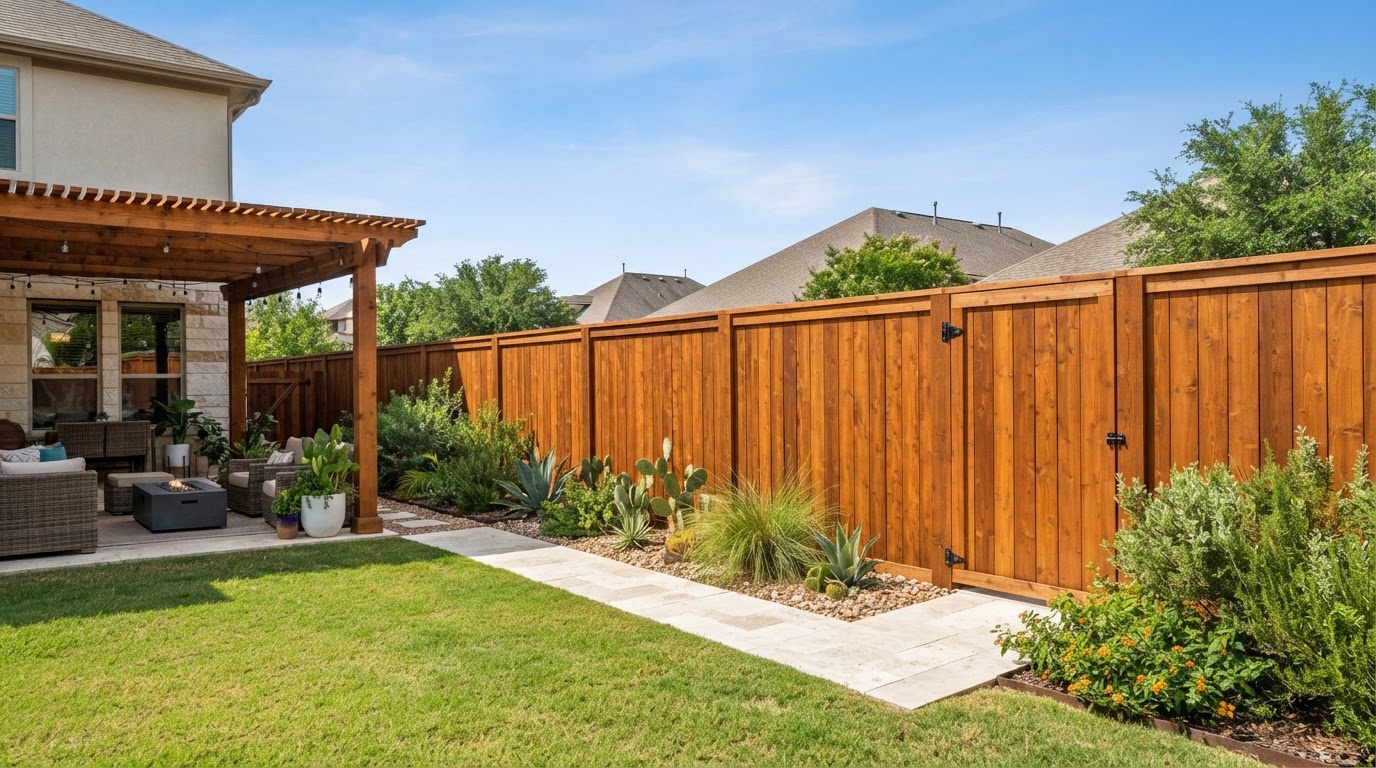
Wood fencing is the most common surface for staining and painting in San Antonio residential properties. Typical projects involve wood privacy fencing, cedar-type fencing, pine fencing, and decorative wood fences — along with the gates, posts, and rails that complete the structure. Previously stained and previously painted fences are both candidates for refinishing when the wood is sound.
Finish selection depends on the wood species, the wood's age, moisture content, any existing stain or paint, sun exposure, the desired opacity, and the maintenance cycle the owner is prepared to take on. A weathered fence, a brand-new fence, and a fence that was painted ten years ago each call for a different approach. Dry Coats does not apply one finish to every fence — the substrate and existing condition drive the recommendation.
New fencing may need to dry and weather before it will accept stain evenly, while older fencing often needs cleaning and loose-coating removal first. Both conditions are evaluated before a coating system is selected.
Fence Preparation Process
Coating wet, dirty, or unstable wood is the fastest way to shorten a fence finish's life. Preparation is what allows the stain or paint to bond and perform.
- Inspection — evaluating wood condition, existing coating, and moisture.
- Cleaning — removing surface contamination, dirt, and mildew.
- Pressure washing when appropriate — using a pressure suited to the wood.
- Allowing adequate drying — letting the wood reach a suitable moisture level.
- Scraping loose coating — clearing failed stain or paint.
- Sanding selected areas — smoothing rough or weathered sections.
- Minor surface repair — addressing small defects where feasible.
- Protecting adjacent surfaces — covering landscaping and nearby structures.
- Coating / staining application — applying the selected finish system.
Proper cleaning is detailed on the pressure washing & surface prep page. The key principle is that stain must absorb into dry, clean wood — coating over moisture or contamination prevents absorption and leads to early failure.
Paint vs Stain for Fences
Paint and stain produce very different results on a wood fence, and the right choice depends on the substrate and the desired appearance.
Paint or a solid-color coating creates a uniform finish that hides more of the wood grain. It suits certain previously painted surfaces and produces a clean, consistent look, but it requires compatible preparation and ongoing maintenance. Stain can retain more visible wood character depending on the system and is available in varying opacity — from transparent to semi-transparent to solid. Stain is often selected for natural-looking wood fences, and the existing finish influences future stain choices.
Neither finish is universally longer-lasting than the other. Substrate condition and preparation matter more than the coating category. A well-prepared fence with the right system for its wood and exposure outperforms a poorly prepared fence regardless of whether paint or stain is used.
San Antonio Sun & Exterior Wood
San Antonio fences take real abuse from the environment. Strong sunlight and UV drive fading and drying, heat stresses the wood and coating, and rain plus moisture cycles cause expansion and contraction. Over time, weathered wood loses its finish and begins to gray.
These conditions make preparation and re-coating cycles important for any San Antonio wood fence. South and west-facing sections exposed to the most direct sun typically need attention sooner than shaded areas. A realistic maintenance plan keeps a fence looking intentional rather than weathered.
Ready to start? Request a detailed estimate from Dry Coats Painting & Contracting.