
Trim, Door & Baseboard Painting Services San Antonio
Surfaces & Project Types
Trim painting is a distinct craft from wall painting. Trim, doors, and baseboards are hard-use surfaces — they get bumped, scuffed, touched, and cleaned — so the preparation and coating system are different from what a wall receives. Dry Coats treats architectural woodwork as its own substrate.
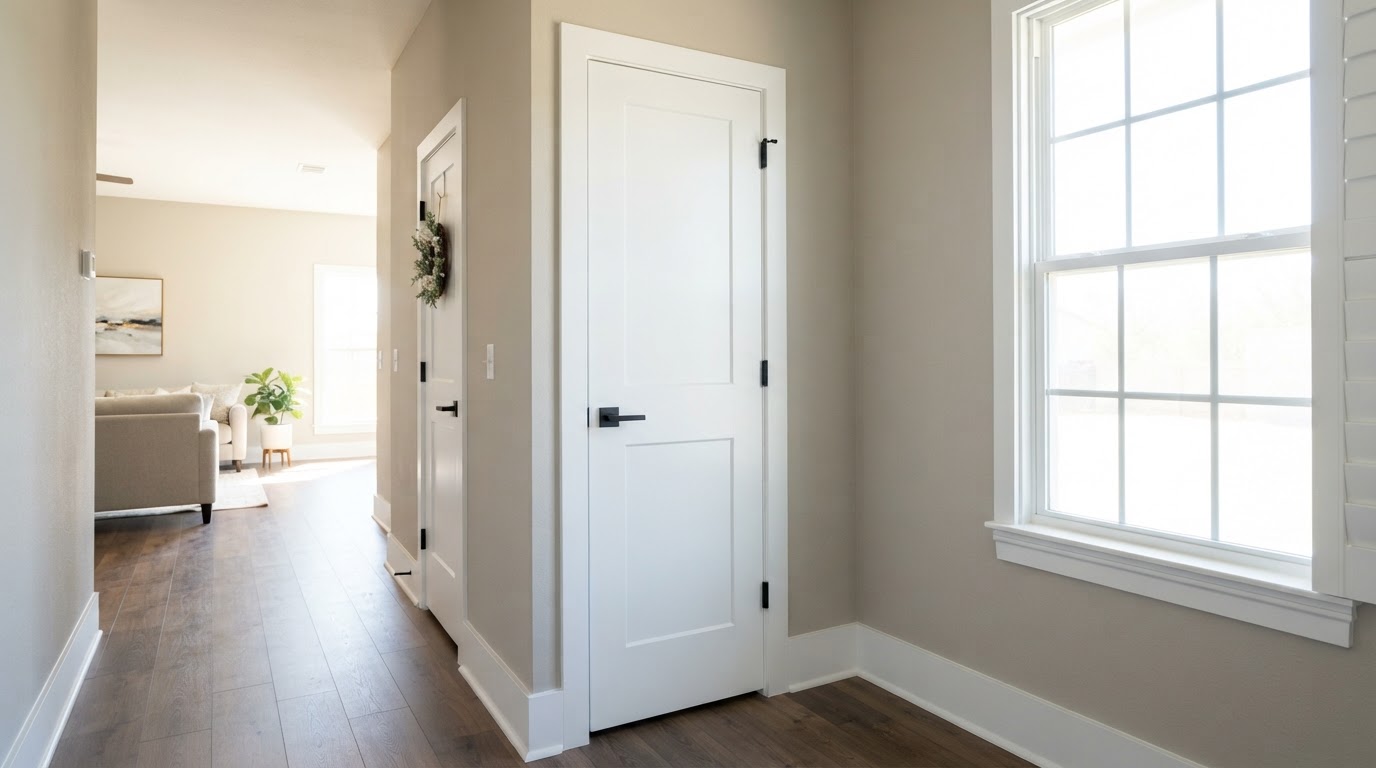
Surfaces include baseboards, interior doors, door frames, window trim, crown molding, wainscoting, chair rails, built-ins where appropriate, and decorative molding. Project types range from painting existing trim to converting stained trim to paint where feasible, finishing new trim, painting remodel trim, and renewing damaged or worn finishes.
Because trim sits at the edges and transitions of a room, the quality of the finish is highly visible. Clean lines, even sheen, and proper adhesion are what separate a professional trim job from a rushed one.
Trim Preparation Process
Trim preparation often differs from wall preparation because trim has harder, glossier existing finishes and more physical contact. The goal is a coating that bonds and resists scuffs.
- Cleaning — removing dust, oils, and residue that interfere with adhesion.
- Deglossing — breaking the gloss on existing finishes so new coating bonds.
- Sanding — creating a mechanical bond and smoothing the surface.
- Filling nail holes — patching nail heads and minor dents.
- Minor caulk work — sealing gaps between trim and wall where appropriate.
- Repair preparation — addressing damage before coating.
- Masking — protecting walls, floors, and hardware.
- Priming — sealing bare wood and stained surfaces with a compatible primer.
- Application & cure — applying the finish and allowing it to reach full hardness.
Stained trim being converted to paint needs a compatible primer to block the stain from bleeding through. Skipping that step is a common reason converted trim fails.
Finish & Color Options
Trim finishes are selected for durability as much as appearance. White and neutral trim remains the most common choice because it stays clean and complements most wall colors. Contrasting trim defines architectural detail, while matching trim and walls creates a modern, continuous look. Door colors can be used to add a deliberate accent.
Sheen matters on trim. Satin and semi-gloss resist scuffs, are washable, and stand up to the contact that baseboards and doors receive daily. The sheen is chosen for the surface's use, not treated as a one-size-fits-all rule. Appearance under lighting is also considered — glossier trim reflects more light, which can highlight imperfections if the preparation is not thorough.
The finish is selected for hardness and washability so painted trim holds up to daily life rather than looking good only on the day it is finished.
Whole-Room & Whole-Home Painting
Trim painting rarely happens in isolation. It ties into a broader painting project, and coordinating it keeps the finish consistent across walls, ceilings, doors, and cabinets.
During a whole-home repaint, trim work is sequenced with interior painting and residential painting so the same spaces are not prepared twice. It also pairs naturally with cabinet painting, drywall repair, and accent walls when those services are part of the same project.
Ready to start? Request a detailed estimate from Dry Coats Painting & Contracting.