
Cool Roof & Heat-Reflective Coatings San Antonio
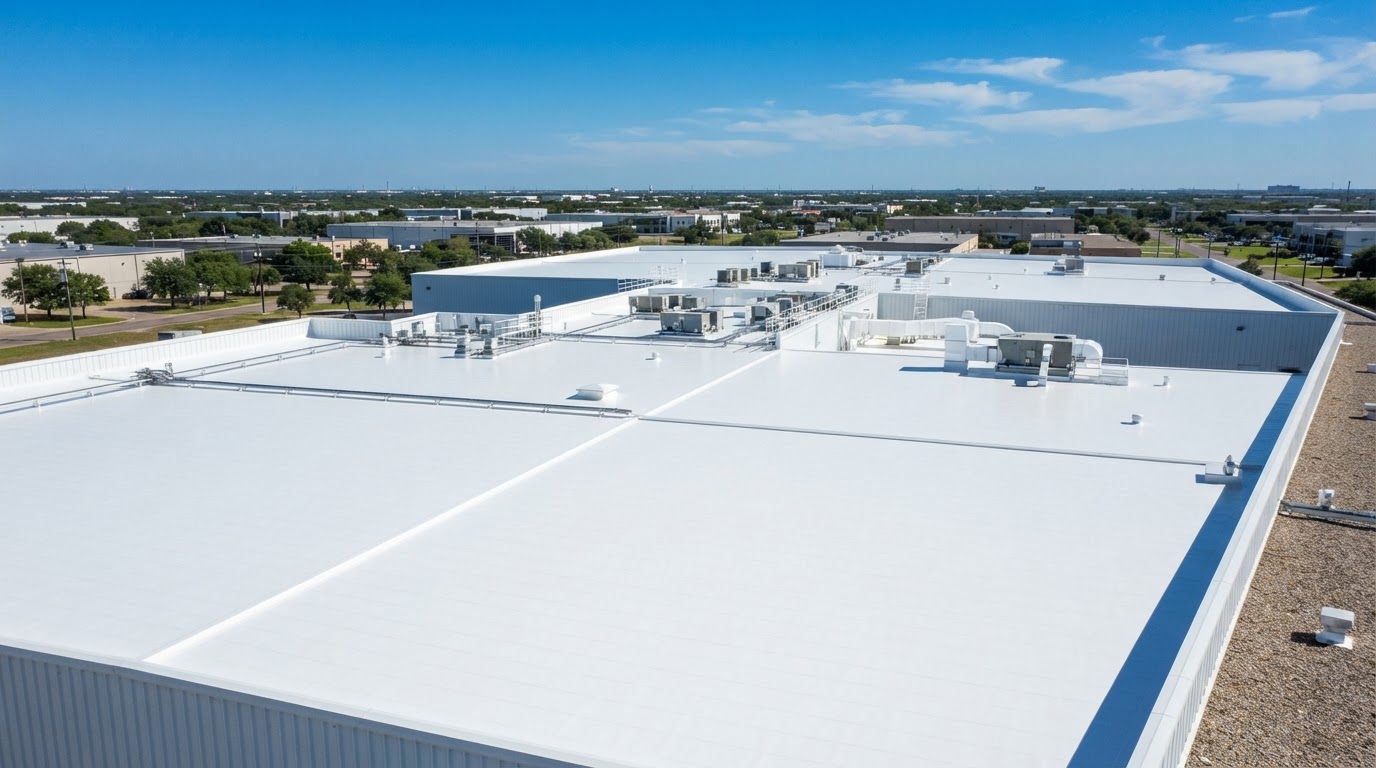
Cool Roof Applications
Reflective coatings are considered for roofs that face strong sun exposure and meet the suitability requirements for coating. Not every roof is a candidate — the existing condition and compatibility are evaluated first.
- Metal roofs — common candidates for reflective coatings.
- Commercial buildings — low-slope and metal commercial roofs.
- Warehouses — large roof areas exposed to sun.
- Shops — commercial and retail shop roofs.
- Industrial buildings — industrial facility roofs.
- Selected low-slope roofing systems — where coating compatibility is established.
Not every roof is suitable for restoration or reflective coating. Roofs with structural failure, widespread leaks, or incompatible substrates may need repair or replacement rather than a coating.
Roof Preparation & Coating Process
A reflective coating is only as durable as the surface it bonds to. Roof preparation ensures the coating adheres and performs, and that underlying issues are addressed before coating.
- Roof condition assessment — evaluating suitability for coating.
- Existing coating evaluation — checking adhesion and compatibility.
- Cleaning — removing dirt, oxidation, and residue.
- Rust / corrosion preparation — treating corroded metal areas.
- Seam / fastener inspection — checking and sealing connections.
- Compatible repairs — addressing defects before coating.
- Primer where required — promoting adhesion to the substrate.
- Reflective coating application — applying the coating system.
For roof restoration intent, see the metal roof coatings & restoration page, and for the building structure, the metal building painting page.
Reflective System Considerations
The reflective system is selected around the roof type, conditions, and performance goals. Different chemistries suit different situations.
- Acrylic reflective coatings — common reflective option for suitable roofs.
- Silicone systems where appropriate — for conditions where silicone is suitable.
- Solar reflectance — the coating's ability to reflect solar energy.
- Surface color — lighter colors generally reflect more.
- UV exposure — how the coating holds up under sun.
- Existing roof compatibility — matching the system to the substrate.
- Ponding-water considerations — addressing areas where water collects.
- Maintenance — planning for inspection and refresh.
Dry Coats does not invent SRI values, reflectance percentages, energy savings, or temperature-reduction percentages unless product-specific documentation is supplied.
Cool Roof Coatings Across San Antonio & South Texas
South Texas sun drives strong heat exposure on commercial and industrial roofs across San Antonio and Bexar County. Reflective coatings are considered for metal and commercial roofs where suitability and preparation support a lasting coating.
For building owners evaluating a cool-roof project, an on-site assessment determines whether the roof is a candidate and which system fits the conditions.
Ready to start? Request a detailed estimate from Dry Coats Painting & Contracting.